Best Monitors for a Home Office
Quick answer
The Acer 27in QHD Office Monitor (B0G4XJGVS7, $119.99) is the best all-around home office monitor because its 2560x1440 IPS panel gives sharper text than 1080p at a size that still sits comfortably at typical desk viewing distances. For a smaller desk, the Acer 23.8in FHD IPS monitor (B09KG5FW1G, $79.99) covers the basics at a lower price.
Picks are ranked from published panel specifications, resolution and refresh rate, plus verified owner reviews on Amazon. No unit was tested in person.
Most home office work is reading and writing text, which makes resolution and panel type matter more than gaming-oriented specs, and the pick that earns Top Pick here is the Acer 27in QHD Office Monitor (B0G4XJGVS7) at $119.99, a 2560x1440 IPS panel with wide viewing angles that renders text noticeably sharper than a 1080p screen of the same size.

Acer 27in QHD 2560x1440 IPS 100Hz Office Monitor KB270U E2biipx
A 2560x1440 IPS panel at 27 in renders text and small UI elements noticeably sharper than a 1080p panel the same size, and IPS keeps color and contrast consistent from off-center seating angles.
The three tiers
Acer 23.8in FHD 1920x1080 IPS 120Hz Office Monitor KB242Y G0bi
This 23.8 in IPS panel runs 1920x1080 at 120Hz, which covers general office work, video calls and web browsing cleanly at a lower price than a QHD panel.
The trade off: At 1080p, text and fine detail will look visibly softer than a QHD panel of the same size once you sit at typical viewing distance.
- Starter
Acer 23.8in FHD 1920x1080 IPS 120Hz Office Monitor KB242Y G0bi
$79.99 Check pricePrices change often

Acer 27in QHD 2560x1440 IPS 100Hz Office Monitor KB270U E2biipx
A 27 in 2560x1440 IPS panel marketed specifically as an office monitor, giving a real jump in text sharpness over 1080p at a size that still fits most desks.
The trade off: A 27 in panel needs more desk depth for comfortable viewing distance than a 24 in screen, so it is a poor fit for a very shallow desk.
- Buy once
Acer 27in QHD 2560x1440 IPS 100Hz Office Monitor KB270U E2biipx
$119.99 Check pricePrices change often
Dell 27 Plus QHD Monitor - S2725DSM - 27-inch QHD (2560x1440) 144Hz 1ms Display, 2 x 3W Speakers, HDMI/DisplayPort 1.4 Connectivity, Height/Tilt/Pivot/Swivel Adjustability, AMD FreeSync - Ash White
This 27 in QHD monitor adds built-in speakers and full height, tilt, pivot and swivel adjustment on the factory stand, which covers ergonomics that cheaper stands leave out even before adding a monitor arm.
The trade off: The added stand adjustability and speakers are the reason for the higher price, so a buyer who already owns or plans to buy a monitor arm is paying for stand features they will not use.
Who should not buy it: Anyone who already has or plans to buy a separate monitor arm, since the built-in stand adjustability is the main premium here.

How we chose
We did not test any of these monitors in person. Rankings come from the panel specifications published in each Amazon listing, including resolution, panel type and refresh rate, cross-checked against verified owner reviews for recurring complaints about backlight bleed, stand quality or dead pixels.
The three tiers span the real price range of monitors suited to office work rather than gaming, from a basic 1080p panel to a QHD display with a fully adjustable stand, and none of the picks here are chosen just because they were the cheapest available.
Does resolution actually matter for office work?
Yes, and the effect is about pixel density, not raw pixel count. Pixel density is measured in pixels per inch, or ppi, and it determines the distance at which the eye stops resolving individual pixels. A 24 in 1080p monitor runs about 92 ppi, and the pixel grid stops resolving at roughly 37 in of viewing distance. A 27 in 1440p monitor runs about 109 ppi, resolving at roughly 31.6 in. A 32 in 4K monitor runs about 138 ppi, resolving at roughly 25 in.
The counterintuitive part is that higher resolution lets you sit closer, not farther away, because a denser pixel grid resolves at a shorter distance rather than a longer one.
| Panel | Approx. ppi | Resolves at approx. |
|---|---|---|
| 24 in, 1080p | ~92 ppi | ~37 in |
| 27 in, 1440p | ~109 ppi | ~31.6 in |
| 32 in, 4K | ~138 ppi | ~25 in |
IPS or VA panel, which one for a home office?
IPS panels hold consistent color and contrast when viewed from an angle, which matters if you sit slightly off center or if a second person looks at the screen during a call. VA panels typically offer deeper contrast straight on but shift more noticeably when viewed off angle. For a single-person desk viewed mostly head on, either works; for a desk where the seating position varies or a second monitor sits at an angle, IPS is the safer general pick.
What refresh rate does office work actually need?
Text and document work does not need a high refresh rate, and 60Hz is enough for reading, writing and video calls. The 100 to 144Hz panels in this guide are common at this price point regardless, and the higher number mainly helps with smoother cursor movement and scrolling rather than being something office work specifically requires.
Do I need a stand with height and tilt adjustment?
A factory stand with height, tilt, pivot and swivel adjustment lets you set the screen top at eye height without buying a separate monitor arm. If you already plan to mount the monitor on an arm, this stand adjustability is not something you will use, and a monitor without it can be a better value in that case.
| Tier | Stand adjustment |
|---|---|
| Starter | Tilt only, typical of entry panels |
| Buy once | Height and tilt on most office-branded stands |
| Ceiling | Height, tilt, pivot and swivel plus built-in speakers |
Shop monitors for home office use
Shown across the range this category actually spans, from $79.99 to $189.99, rather than the cheapest few.
- Philips Computer Monitors
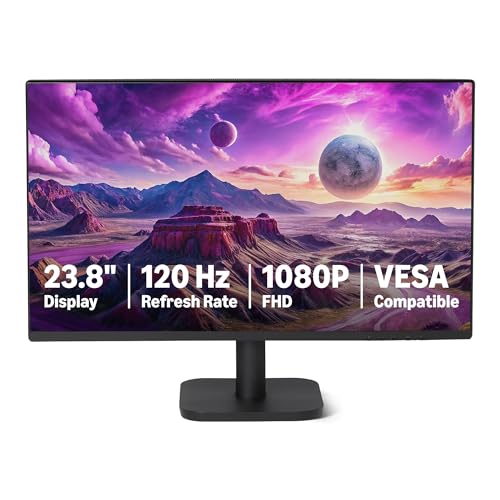
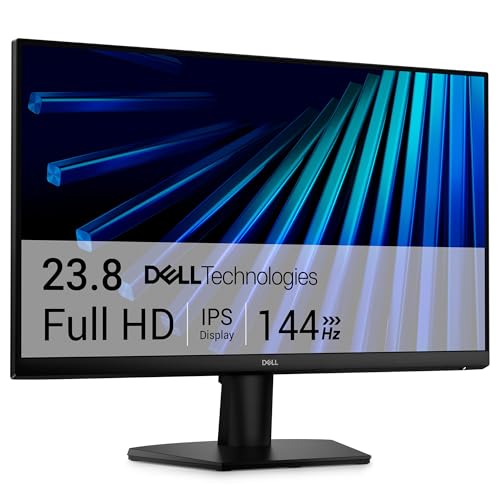
Philips 24 Inch Computer Monitor FHD 100Hz VA VESA Flicker-Free, 241V8LB
$79.99 Check pricePrices change often - Acer
Acer 27in QHD 2560x1440 IPS 100Hz Office Monitor KB270U E2biipx
$119.99 Check pricePrices change often - Acer
Acer Nitro 27in QHD 2560x1440 IPS 180Hz Gaming Monitor KG271U N3bmiipx
$149.99 Check pricePrices change often


Buying tips
- Match panel size to desk depth using the viewing distance figures above rather than buying the largest panel available.
- Choose IPS over VA if your seating position varies or a second person regularly views the screen.
- Skip paying for a fully adjustable factory stand if you already own or plan to buy a monitor arm.
- A 27 in QHD panel is the general sweet spot for text sharpness without needing a very deep desk.
Get the desk setup checklist
One page: the measurements to take, the order to set them in, and the numbers to check against. Free, no spam.
The mailing list opens shortly. Every measurement it covers is already on this site, in the calculators and the fit tables, at no cost and with no address required.
Questions people ask
Is 24 in or 27 in better for a home office?
A 24 in 1080p monitor resolves at roughly 37 in of viewing distance, which suits a shallower desk. A 27 in 1440p monitor resolves at roughly 31.6 in, letting you sit closer while still seeing sharper text. Desk depth and how close you actually sit should decide this more than a general size preference.
Do I need 4K resolution for office work?
A 4K panel gives the sharpest text at short viewing distances, but a 27 in 1440p monitor already delivers a clear jump over 1080p for reading and writing at typical desk distances. 4K is worth the added cost mainly if you also do detailed photo or video work, or if you plan to sit unusually close to a larger panel.
Should I get a curved monitor for a home office?
A curve mainly benefits wide or ultrawide panels by keeping the edges at a more consistent viewing distance from the eye. On a standard 16:9 monitor at 24 to 27 in, the curve makes little practical difference for office work, where the whole screen already sits close to the same distance from your eyes.
What panel type is best for video calls in a home office?
IPS panels hold consistent color and brightness when viewed slightly off angle, which matters for video calls where lighting and your on-screen appearance are visible to others. VA panels can look fine straight on but shift more in contrast if you lean or sit off center during a call.
Does a higher refresh rate help with office work?
Not directly. Reading, writing and video calls do not require more than 60Hz. A higher refresh rate mainly smooths out cursor movement and scrolling, and many monitors at this price point include it as a side benefit of the panel used, not because office work specifically needs it.
How far should I sit from my home office monitor?
A reasonable starting distance is roughly arm length, then fine-tune using pixel density. A 24 in 1080p monitor resolves fully at about 37 in, a 27 in 1440p monitor at about 31.6 in, and a 32 in 4K monitor at about 25 in, so a higher resolution panel lets you sit closer, not farther away.